World Earth Day
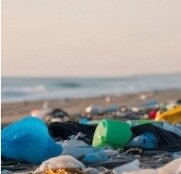
Today, April 22, marks World Earth Day, a crucial moment to reflect on the impact we have on our planet and how we can act to protect it. This year, the theme is "Planet Vs Plastic", a call to action against one of nature's greatest enemies: plastic.
Plastic is everywhere, from the packaging of the food we eat to the water bottles we drink from. But its convenience comes at a high price. Every year, hundreds of thousands of tons of plastic end up in our oceans, threatening marine life and, ultimately, our own existence.
Europe is warming faster than the global average, and Italy directly contributes 15% of the plastics polluting our seas and oceans.
This Earth Day calls us to a collective commitment to reduce plastics by 60% by 2040 and eliminate single-use plastics by 2030.
Plastic has entered our economies by innovating entire sectors and improving the lives of five generations of people, but now we face the problem of how to dispose of it and how to replace it with biodegradable materials where possible.
The plastic revolution began in the 19th century, with the creation of celluloid by John Wesley Hyatt in 1869, which marked the birth of the first plastic objects. However, it was in the 20th century that plastic truly transformed our economy and society.
In the 1950s and 1960s, innovation in the field of plastics reached new heights, with the introduction of materials such as polypropylene and high-density polyethylene, which further expanded its applications. These developments led to an exponential increase in plastic production from: 1.5 million tons in 1950 to nearly 300 million tons today.
We cannot ignore the silent threat of microplastics, particularly dangerous because they are often invisible to the naked eye. A study conducted in Italy revealed that 35% of fish and invertebrates in the central Tyrrhenian Sea had ingested microplastics1. This means that, even if we do not directly eat plastic, it enters the food chain and reaches us through the fish we regularly consume, such as anchovies and mackerel.
No less worrying is plastic pollution in soils. Plastic fragments break down and infiltrate the soil, becoming microplastics that are difficult to eliminate and can cause damage to plant and animal biodiversity2. This problem is particularly serious as soil is a fundamental element for our food security and the health of ecosystems.
As we celebrate World Earth Day, it is essential to remember that every piece of plastic ever produced still exists in some form, and will continue to exist for centuries. This awareness must guide us towards a more sustainable future, where innovation and responsibility go hand in hand in creating alternative solutions to plastic.
1-Microplastics in fish... and on the table! - Greenpeace Italy
2-The macro problem of micro and nano plastics in soils (fondazionecapellino.org)