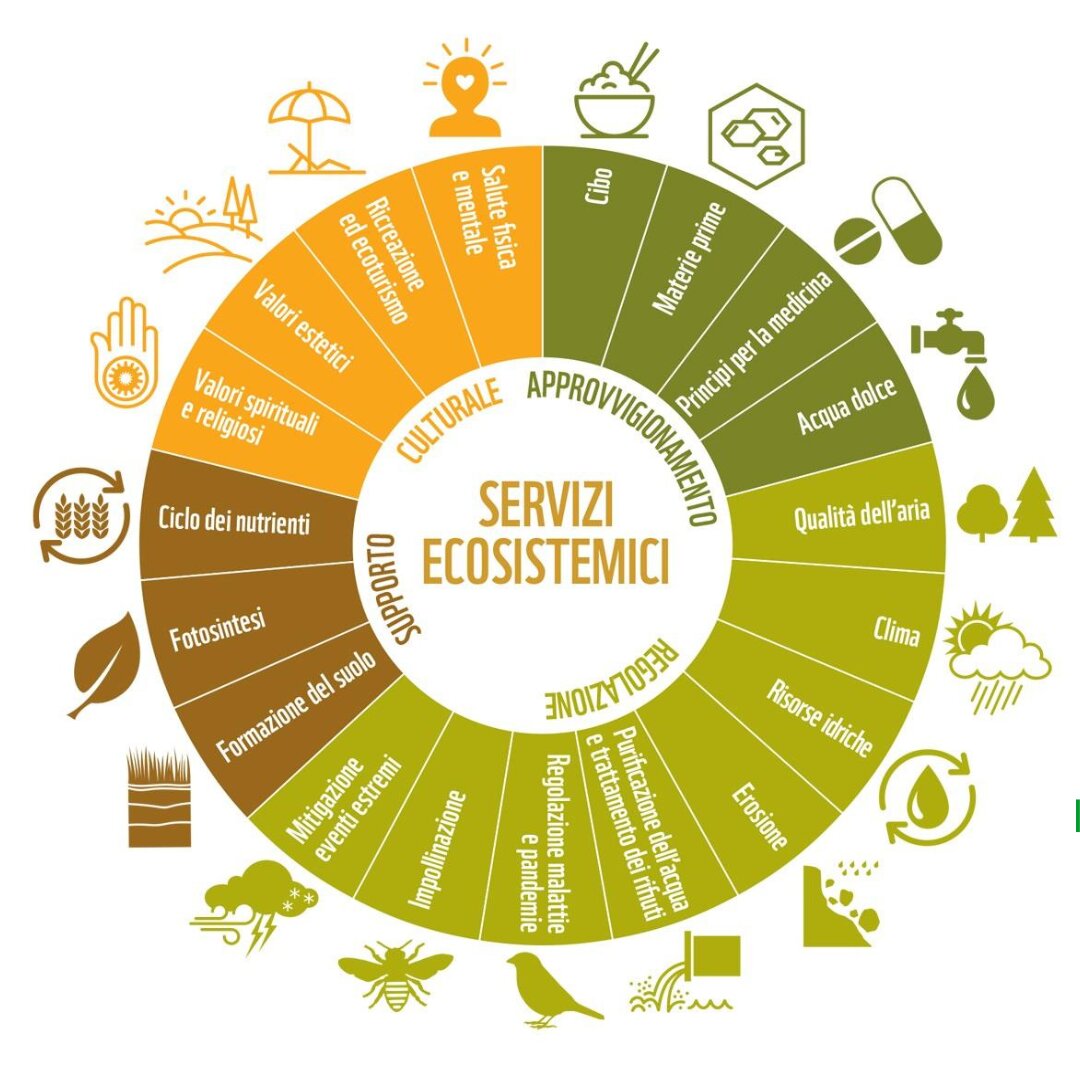
Natural Capital can be defined as the set of natural resources, such as air, water, soil, biodiversity, and landscapes, that provide economic, social, and environmental benefits to humans. These resources are essential for human life and well-being, and play a fundamental role in the global economy and ecosystem. The concept of Natural Capital emphasizes the importance of preserving and sustainably managing natural resources to ensure the well-being of present and future generations. The European Biodiversity Strategy 2030 aims to protect biodiversity and natural ecosystems, promoting the recovery of nature and the restoration of damaged ecosystems. This strategy also includes measures to integrate biodiversity into economic sectors and public policies. In the European Agenda 2030, the vision of humans within the environment has evolved towards a bio-centric approach, which places nature at the center of human decisions and actions. This means recognizing the intrinsic value of nature and promoting a harmonious and sustainable interaction between humans and the environment. This approach is reflected in European policies for the conservation of Natural Capital and for the promotion of biodiversity and healthy ecosystems. Within the Green Deal program, the European Union has outlined an action plan to make the European economy sustainable and achieve climate neutrality by 2050. This plan includes various initiatives to protect Natural Capital, such as the adoption of an Action Plan for the Circular Economy and the promotion of green investments. Furthermore, European legislation includes various directives and regulations that promote the conservation of Natural Capital: 1. Habitats Directive and Birds Directive: These directives establish the Natura 2000 ecological network, which includes protected areas for the conservation of biodiversity and natural habitats throughout the European Union. 2. Water Framework Directive: This directive sets objectives for the protection and improvement of the quality of surface and groundwater in Europe. 3. Regulation on Invasive Alien Species: This regulation aims to prevent, control, and manage invasive alien species that can harm biodiversity and natural ecosystems. 4. Common Agricultural Policy (CAP): The CAP includes measures to promote the sustainable management of natural resources, the conservation of biodiversity, and the protection of agricultural ecosystems. 5. Green Deal: The Green Deal is a European Union action plan that promotes environmental sustainability and the transition to a green economy, including initiatives for the protection of natural capital and the promotion of green investments. These are just some examples of European regulations that address the topic and demonstrate the European Union's commitment to the protection of bio-habitats and the promotion of sustainable development. These activities are carried out through ecosystem services. Ecosystem services are the direct and indirect benefits that ecosystems provide to humans and to nature itself. These services include a wide range of contributions that ecosystems offer, such as food production, climate regulation, air and water purification, protection from natural disasters, recreation and human well-being, and much more. Essentially, ecosystem services represent the way in which ecosystems support life and human well-being, providing vital resources and benefits for societies and the environment. In conclusion, it is essential to recognize the importance of natural capital and ecosystem services for our society and for the health of the planet. To achieve the Green Deal objectives on time, we must adopt an integrated and ambitious approach that involves all sectors of society and all societies present on the planet. This includes the promotion of sustainable agricultural practices, the protection and restoration of ecosystems, the transition to renewable and low-emission energies, as well as the adoption of policies and laws that favor environmental sustainability. Moreover, it is essential to invest in research and innovation to develop technological and sustainable solutions, as well as to promote environmental awareness and education to encourage behavioral change at both individual and collective levels. Only through concrete and coordinated commitment at the global level can we hope to achieve the objectives of the Green Deal and ensure a sustainable future for present and future generations. We always tend to underestimate the many warnings that the planet sends us; we should be more aware of the fact that we cannot survive without the bio-habitats in which we live. They not only do not need us, but without us they would probably thrive better.
The concept of Natural Capital is central to European policies for sustainability and environmental protection. In particular, the European Biodiversity Strategy 2030 and the Green Deal are two important initiatives that promote its conservation and restoration.
1989-2023
Copyright © 2024 - ADA Research & Development - all rights reserved
info@adaricerca.it
Natural Capital
Natural Capital
2024-07-22 13:20
2024-07-22 13:20
Array() no author 90827